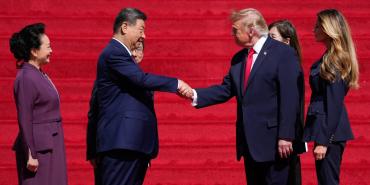



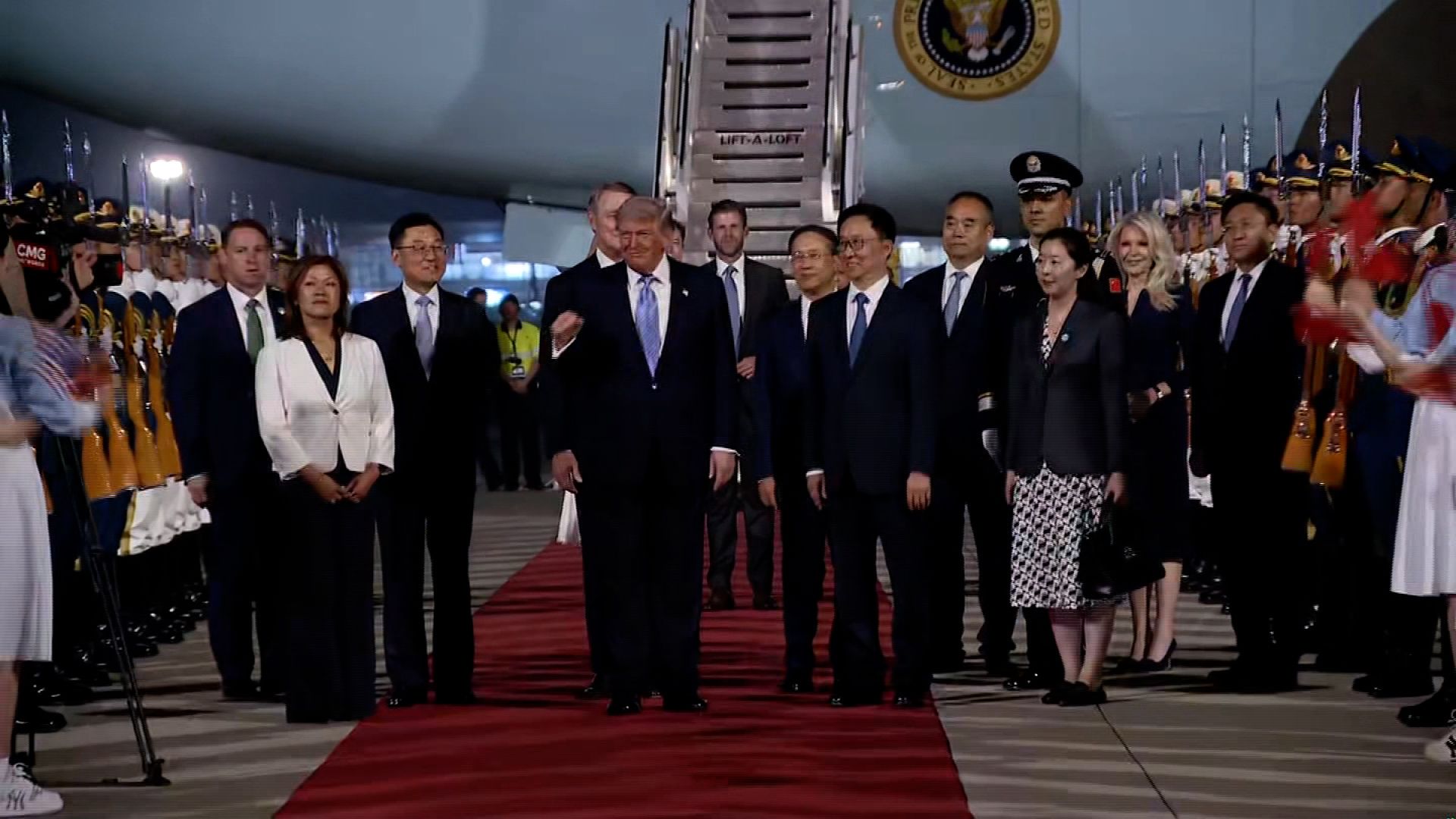
President Donald Trump arrived in Beijing on Wednesday for a historic state visit centered on trade, global security, and the future of U.S.-China relations. Chinese officials rolled out a formal red-carpet welcome as Trump landed aboard Air Force One ahead of meetings with Chinese President Xi Jinping.
The summit marks the first visit by a sitting U.S. president to China in nearly a decade and comes at a critical moment for the global economy. Discussions are expected to focus heavily on trade policy, artificial intelligence, Taiwan, energy markets, and ongoing instability in the Middle East tied to the Iran conflict.
Several major American business leaders reportedly joined the delegation, including executives connected to the technology, finance, and manufacturing sectors. Analysts view the visit as a major test of whether Washington and Beijing can stabilize economic tensions while protecting their own strategic interests.
The visit had originally been planned earlier in the year but was delayed amid rising geopolitical tensions surrounding Iran and the Strait of Hormuz. In recent weeks, both nations signaled interest in improving communication and avoiding further economic escalation.
For Economic War Room viewers, the summit underscores a growing reality: economic warfare is now central to global diplomacy. Trade routes, energy access, semiconductor dominance, and currency influence are no longer just business issues — they are national security issues. The outcome of the Trump-Xi meetings could have significant implications for global markets, supply chains, and America’s economic future.