



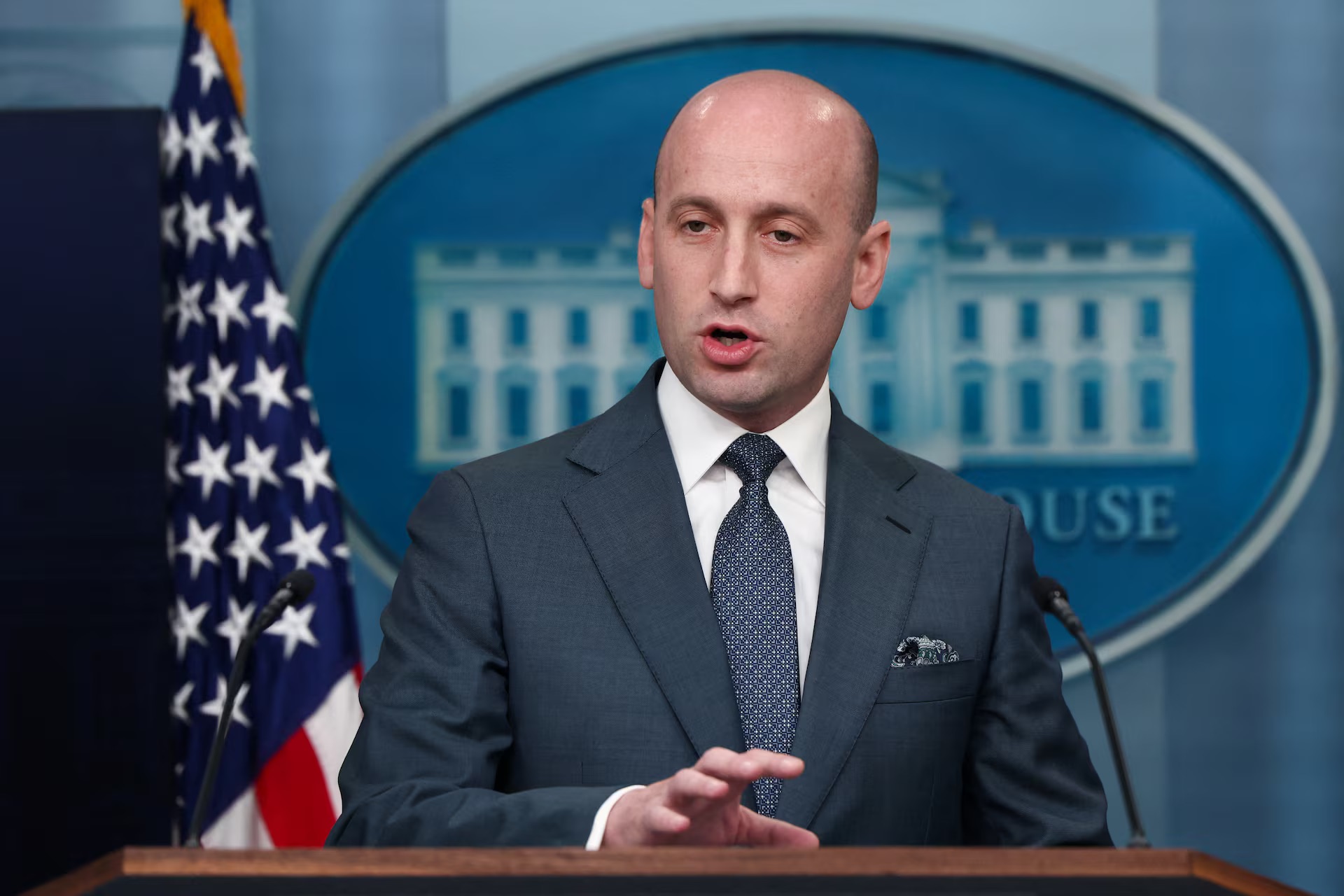
President Donald Trump has tapped longtime adviser Stephen Miller to replace Susie Wiles as White House chief of staff, signaling a continued commitment to his America First agenda as the administration prepares for a new political battle in Washington.
President Donald Trump announced Friday that Stephen Miller, his current deputy chief of staff and one of his closest advisers, will take over as White House chief of staff beginning Monday, November 9.
Miller will replace Susie Wiles, who is transitioning to a role within Trump's political operation after serving as the administration's chief of staff.
In an announcement posted to Truth Social, Trump praised Miller's loyalty and experience, describing him as one of his most trusted advisers.
"I am pleased to announce that Mr. Stephen Miller, the current Deputy Chief of Staff of the Trump Administration, and one of my most trusted advisors, will become the Chief of Staff starting Monday, November 9, 2026," Trump wrote.
Trump also thanked Wiles for her service, saying she had done an outstanding job in the position.
The announcement comes just days after Democrats secured control of both the House of Representatives and the Senate in the 2026 midterm elections, setting the stage for an increasingly contentious political environment during the remainder of Trump's presidency.
Miller's Growing Influence in the Trump Administration
Miller, 41, has been a central figure in Trump's political operation since the president's first campaign in 2016. He has played a significant role in shaping the administration's domestic policy, particularly its immigration and border security agenda.
During Trump's second term, Miller served as deputy chief of staff and homeland security adviser, helping coordinate some of the administration's most consequential policy initiatives.
His promotion places him in one of the most influential positions in the White House. As chief of staff, Miller will oversee White House operations, manage access to the president, coordinate administration priorities, and help guide the implementation of Trump's agenda.
The appointment also signals that Trump intends to keep his administration's policy direction firmly in place despite the political setbacks Republicans experienced in the midterm elections.
Following the announcement, Miller expressed gratitude for the opportunity and reaffirmed his commitment to the administration.
"The mission now is more clear than ever: Fight with all of our soul to support our President and defend this magnificent Republic," Miller wrote on X.
A Major Transition Following Republican Midterm Losses
The leadership change comes at a pivotal moment for the Trump administration.
With Democrats preparing to take control of both chambers of Congress, the White House will face increased congressional oversight, political opposition, and challenges to advancing its legislative priorities.
Miller's appointment could indicate a more aggressive approach as the administration navigates its relationship with a Democratic-controlled Congress.
Several Democratic leaders have already criticized the decision. House Democratic Leader Hakeem Jeffries and Senate Democratic Leader Chuck Schumer both condemned Miller's promotion, pointing to his central role in developing the administration's immigration policies.
However, Trump's decision demonstrates that he continues to place confidence in the advisers who have helped shape his administration's America First agenda.
Wiles Moves to Trump's Political Operation
Wiles, who became the first woman to serve as White House chief of staff, confirmed Friday that she was leaving the position.
In a statement, she reflected on her time serving the president and highlighted the administration's accomplishments, including border security, tax cuts, economic policy, and its America First priorities.
"Serving President Trump in the White House has been the honor of a lifetime," Wiles wrote.
She also emphasized that while her position was changing, her commitment to the president and his mission remained unchanged.
Wiles was a key figure in Trump's 2024 campaign and helped establish a more disciplined White House operation during his second term.
Her transition to Trump's political operation will allow her to continue contributing to the president's broader political efforts.
What Comes Next for the Trump Administration?
Miller's elevation represents more than a routine White House staffing change. It places one of Trump's most influential policy advisers in a position with direct oversight of the president's daily operations and the administration's broader priorities.
With Democrats taking control of Congress, the coming months will test the administration's ability to maintain momentum on its economic, immigration, and national security objectives.
For Trump, selecting a longtime loyalist rather than signaling a change in direction suggests that he intends to continue pushing the priorities that defined his presidency.
The transition begins Monday, November 9, as Miller officially assumes the role of White House chief of staff.