


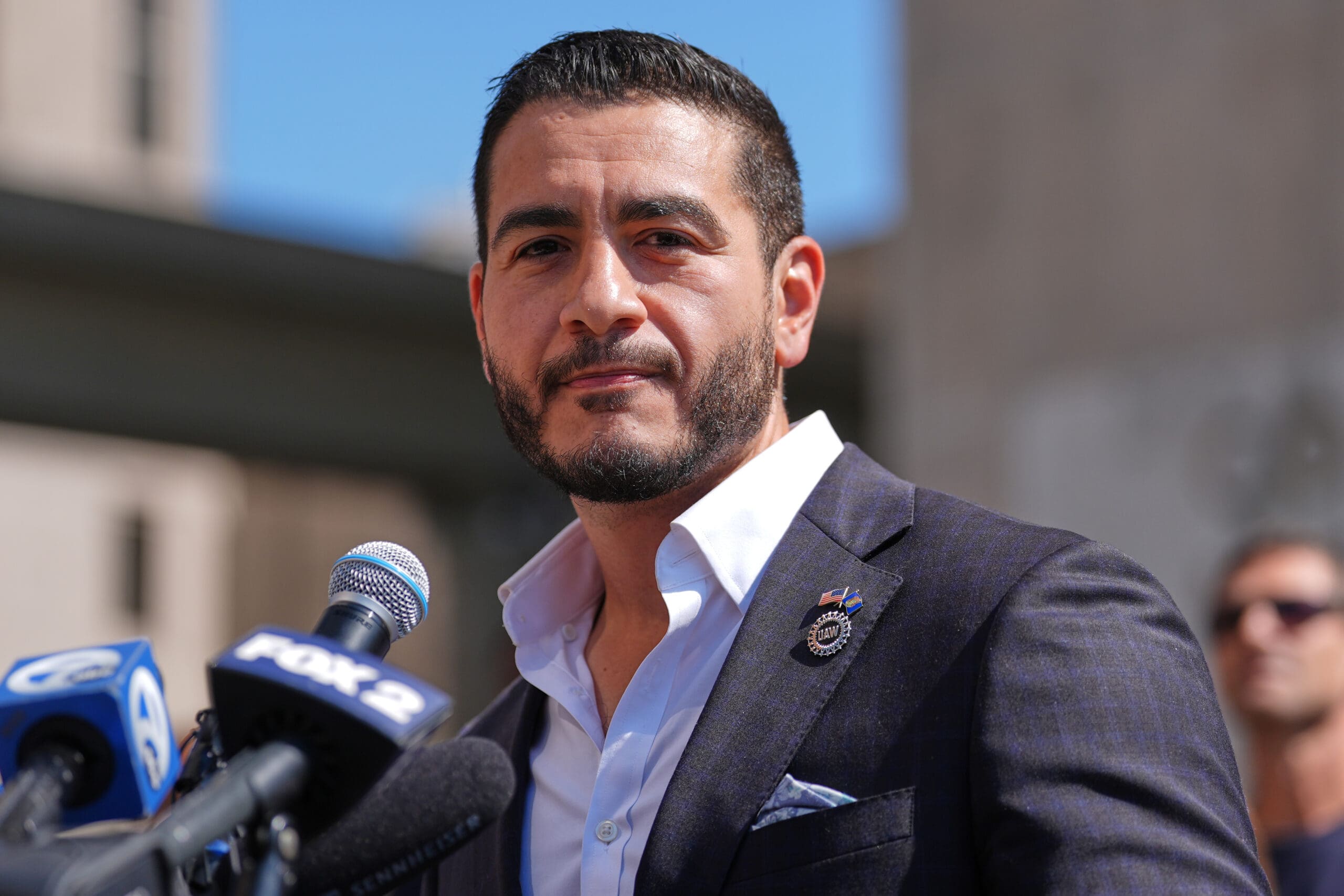
Michigan Democratic Senate candidate Abdul El-Sayed is facing renewed scrutiny after his half-sister reportedly claimed in past social media posts that their family has longstanding ties to the Muslim Brotherhood.
The comments, uncovered by the Washington Free Beacon, appear to conflict with El-Sayed’s recent public denials that he or his family have connections to the organization.
El-Sayed’s half-sister, Eman Abdelhadi, a University of Chicago professor, reportedly wrote in a 2012 social media post that “my family has long been MB,” referring to the Muslim Brotherhood. In another post the following year, she reportedly referenced family members being jailed for involvement with the organization and expressed support for those connected to the movement in Egypt.
The allegations come after El-Sayed appeared on Meet the Press, where he was questioned about alleged connections between his family and the Muslim Brotherhood. El-Sayed denied having ties to the organization and rejected allegations concerning his family.
The controversy also involves El-Sayed’s maternal family background. According to reporting cited by Breitbart, his mother previously worked for the Islamic American Relief Agency, an organization that was designated by the U.S. government over alleged support for al-Qaeda.
El-Sayed, a former Detroit health official and Democratic candidate for governor of Michigan in 2018, is now seeking the Democratic nomination for U.S. Senate. He faces Republican Mike Rogers in a closely watched Michigan Senate contest.
The allegations have quickly become a political issue, with Republicans arguing that El-Sayed has not been forthcoming about his family’s history and associations. El-Sayed and his supporters have pushed back against the accusations.
The Muslim Brotherhood, founded in Egypt in 1928, has maintained an international network of affiliated organizations and movements. Its history and relationship with political Islam, as well as the activities of some of its branches and affiliates, have made the organization a subject of significant scrutiny in the United States and abroad.
For Michigan voters, the controversy raises questions about El-Sayed’s past, his family's reported associations, and whether those connections should factor into their decision at the ballot box.
As the 2026 midterm elections approach, scrutiny of El-Sayed’s background is likely to continue, particularly as both parties focus on Michigan’s Senate race.